Geographic Pricing Shifts and Subscriber Access Boundaries
OnlyFans subscribers in different countries routinely see different numbers for the same creator, and the gap is rarely explained at checkout. This guide explains how regional price variations are applied, why your settled charge often differs from the displayed figure, and what access boundaries exist when you travel or use privacy tools.
The platform has no built-in discovery feed, so ranking directories like BestOnlyFans exist to compare creators across regions. A rate shown in euros, pounds, or Canadian dollars is not always a straight conversion of the creator’s base figure.

How OnlyFans Implements Regional Price Variations
Creators set a base rate, and that base rate is denominated in US dollars. The platform then presents that figure in your local currency at the point of sale. In most cases this is a straightforward conversion, but the display figure is locked at the moment you subscribe rather than recalculated daily.
Purchasing power adjustments are the second layer. On some pages the platform may display a regional figure that does not track the exchange rate precisely. This is uncommon, but it exists, and it explains why two subscribers in neighbouring countries can report different numbers for an identical page.
Paid subscriptions run from $4.99 at the minimum to $49.99 at the maximum, though the typical range sits between $4.99 and $15, with averages clustering around $5 to $10. Free pages are set to $0 and earn through pay-per-view messages and tips instead. Note that promotional first months can fall below the $4.99 floor, for example a $3 first month, but the base price itself may not.
- The creator sets a USD base rate for the page.
- The platform converts that rate into your local currency using an internal rate.
- A regional purchasing power adjustment may be applied, though this is uncommon.
- The display price locks at the subscription moment and does not move with later currency swings.
If the exchange rate shifts between signup and renewal, your renewal does not automatically mirror the change. The same lock applies when a creator raises their price: auto-renew stops, and existing access continues until the paid period ends.

Currency Conversion Mechanics and Hidden Costs
A displayed price in your local currency is not the amount your bank will settle. The platform’s figure is the starting point, not the final number on your statement.
Card networks apply their own exchange rate, which usually differs slightly from the rate used on the platform’s display. On top of that, many issuers add a foreign transaction fee, typically between 0 percent and 3 percent, depending on the card and the country of the issuer.
When a checkout offers to charge you in your home currency rather than the merchant’s currency, that convenience often carries a premium of roughly 3 to 5 percent. Declining the offer and letting your card network handle the conversion is usually cheaper.
- The platform’s displayed local price, which is your baseline.
- The card network’s actual exchange rate applied at settlement.
- Your issuer’s foreign transaction fee, commonly 0 to 3 percent.
- Any dynamic currency conversion premium offered at checkout, often 3 to 5 percent.
These layers explain most of the complaints about prices that changed between the page and the statement. They did not change.
Tip: screenshot the displayed price immediately before you confirm payment. It is the single most useful piece of evidence if the settled amount later differs by more than a trivial margin.
Access Boundaries for VPN and Travel Scenarios
Geography affects more than price. The platform applies fraud screening to payment attempts, and a mismatch between your account’s normal location and your current connection can trigger a re-verification request.
Crossing into a different billing region is where friction starts, and persistent VPN use can look like an account takeover attempt rather than a legitimate subscriber. Content availability is a separate matter entirely. Creators can apply their own region-blocking choices, so a page that loads at home may be unavailable elsewhere for reasons that have nothing to do with your payment method.
- Same-region travel: no meaningful impact on billing or access.
- Cross-region travel: may trigger a payment re-verification request.
- Persistent VPN use: can raise fraud flags on the account.
- Creator region-blocking: content availability varies independently of price.
- Tax documentation requirements: these vary by your subscriber jurisdiction, not the creator’s.
Using a privacy tool to appear in a cheaper country rarely produces a cheaper subscription. The displayed figure may shift, but the payment screening is designed to catch exactly that pattern, and the card verification hold of $0.10 exists partly to confirm the instrument is genuine. That hold is refunded within days.

BestOnlyFans Regional Pricing Data Displays
BestOnlyFans captures displayed pricing across regions and surfaces it on ranking cards, so a subscriber can see how a page’s rate presents in more than one currency before committing. The methodology flags atypical variances rather than hiding them inside an average, and each flag points to the specific region where the display diverges.
That flagging matters because a large gap between two regions for the same creator usually signals a purchasing power adjustment or a stale conversion rate, not a genuine discount for one audience. Ranking cards are a starting point for verification, not a substitute for checking the live checkout figure.
| Region | Displayed Range | Variance from USD Base |
|---|---|---|
| United States | USD base, no conversion | 0% (reference) |
| European Union | EUR conversion, VAT implications | Small, plus applicable tax |
| Selected emerging market | Local currency, possible adjustment | Occasionally wider, flagged by methodology |
It shows the shape of the problem: the same creator base rate presents differently depending on where the subscriber sits, and only one of those three rows is a pure conversion. If you are browsing rankings for a specific market, the best onlyfans canada models listings illustrate how a single regional view can compress a wide range of underlying base rates into one comparable column.

Budgeting Across Multiple Currency Environments
Subscribers who earn in one currency, bank in another, and travel through a third face genuinely unpredictable monthly totals. The problem is not any single subscription. It is the accumulation of small conversion differences across five or ten renewals landing on different days.
The fix is administrative rather than financial. Pick one currency as your reporting currency, convert everything into it for tracking purposes, and stop trying to reason about costs in the currency you happened to see at checkout. Four adaptations keep a multi-currency budget stable:
- Designate one primary currency for all monthly cap tracking.
- Apply a 5 percent conversion buffer to every non-primary-currency spend.
- Cluster subscription renewals into periods where a single currency dominates your transactions.
- Reconcile settled amounts weekly against your estimates rather than monthly.
Weekly reconciliation catches rate drift early. A subscription business model depends on predictable renewals, and a 5 percent buffer absorbs most of the noise without distorting your overall picture.
Detecting and Disputing Anomalous Regional Charges
Most billing surprises are conversion artefacts. A minority are genuine errors, and those deserve a documented challenge rather than a passive cancellation. The difference between the two is whether the variance is consistent with known conversion layers.
Start with three detection steps, then choose from three dispute paths depending on what the evidence shows. Keep the sequence intact, because a dispute opened without documentation is usually closed without resolution.
- Screenshot the displayed price before payment.
- Compare the settled amount within 48 hours.
- Flag any variance exceeding 10 percent for investigation.
Platform support handles display errors, such as a figure that did not match the checkout screen. Your card issuer handles unauthorised conversion, including dynamic currency conversion you did not consent to. Local consumer protection authorities are the route for systematic overcharging that affects multiple subscribers in the same region.
For unauthorised charges, treat the case as you would any suspect transaction. The same verification habits that protect against phishing attempts apply here: confirm the merchant, confirm the amount, and never resolve a billing question through a link sent by an unexpected message.

The Platform Fee Across Currency Conversions
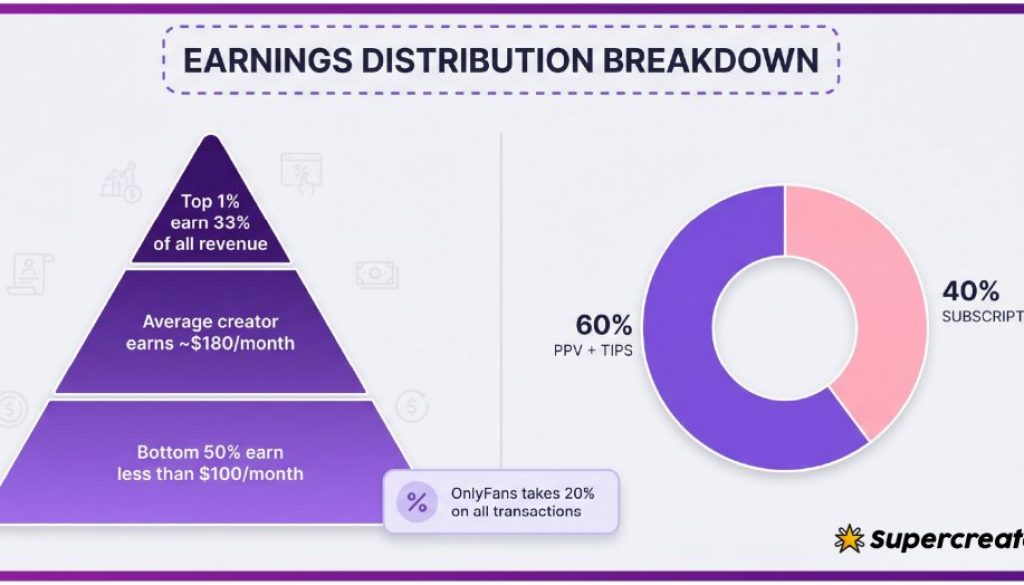
The platform takes 20 percent of everything, and the creator keeps 80 percent. That split is consistent, but it is calculated on the converted amount rather than the creator’s original base figure.
Rounding is not a hidden fee. It is arithmetic. When a base rate is converted, the fee applies to the converted number, and the creator’s payout reflects that converted base.
| USD Base | Converted Price | Platform Fee | Creator Receives |
|---|---|---|---|
| $9.99 | Converted at internal rate | 20% of converted figure | 80% of converted figure |
| $14.99 | Converted at internal rate | 20% of converted figure | 80% of converted figure |
| $24.99 | Converted at internal rate | 20% of converted figure | 80% of converted figure |
PPV messages unlock up to $50, paid chat commonly runs $3 to $5 per message, and tips can reach $100. Each of those flows through the same 20 percent fee and the same conversion logic, which is why a detailed statement can show several slightly different effective rates for the same creator.

FAQ
Can I see a creator’s USD base rate before subscribing in my local currency?
Not directly. The platform presents the price in your local currency by default, and there is no toggle that reveals the underlying dollar figure. Ranking directories that capture multi-region displays are the practical workaround, and the checkout screen remains the authoritative number for your own account.
Why does my OnlyFans charge show a different amount than displayed at checkout?
Your card network applies its own exchange rate, your issuer may add a foreign transaction fee of 0 to 3 percent, and dynamic currency conversion can add a further 3 to 5 percent premium if you accept it at checkout.
Will using a VPN to appear in another country unlock different prices?
The displayed figure may change, but the payment screening is built to notice location mismatches. Persistent VPN use can raise fraud flags, trigger re-verification, or block the payment entirely.
How does OnlyFans handle sales tax or VAT in different regions?
Tax is applied according to your billing jurisdiction rather than the creator’s location. That is why a European subscriber may see a converted price plus applicable tax, while a subscriber elsewhere sees the converted price alone.